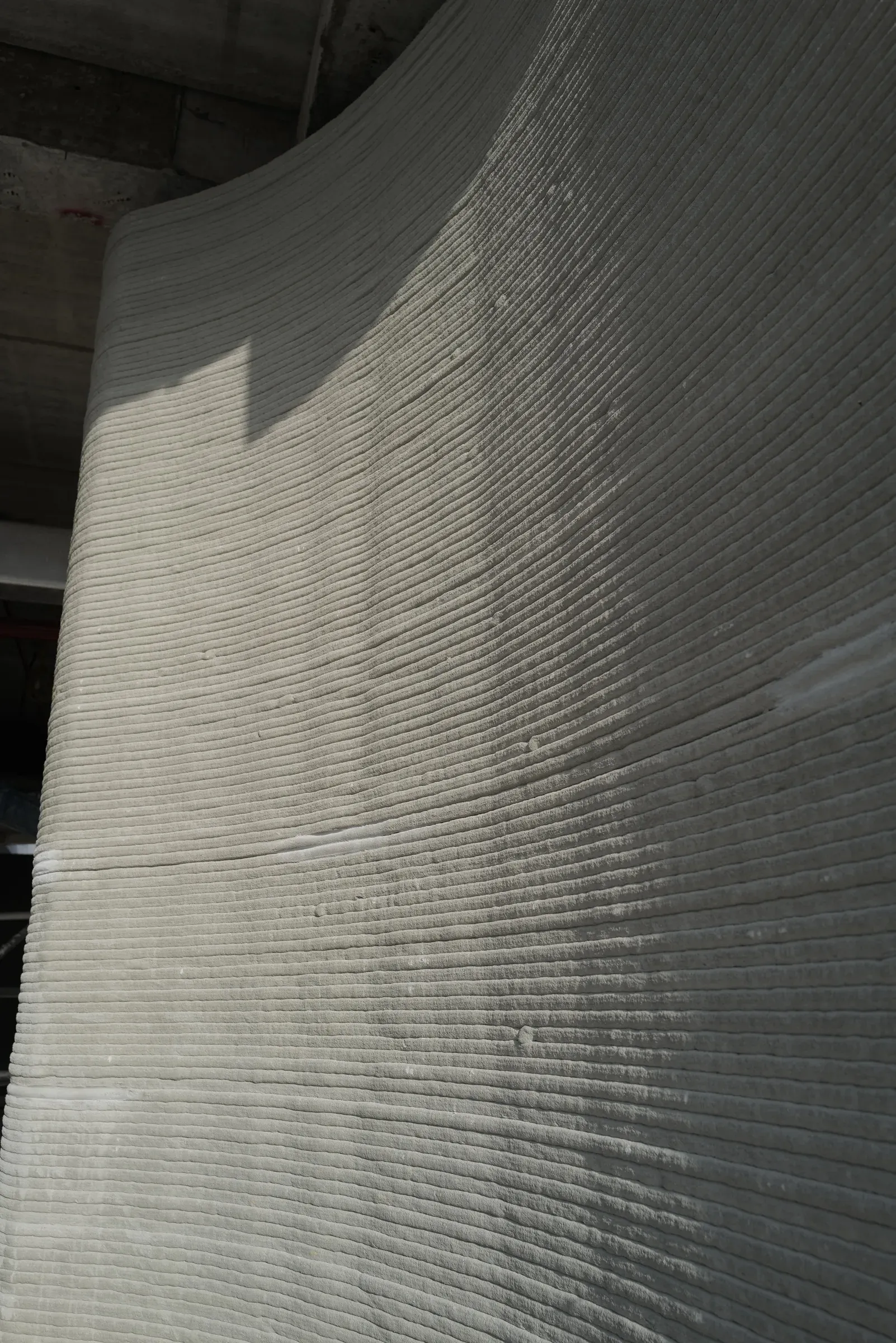
Printed wall · School 08
04Research & development
Nothing like it
existed.
So we built it. GGI writes its own planning software, develops printable mixes with Qatar's research institutions and trains its own crews. The R&D is not a department; it is how the machines get to site.
01Software · First of its kind, only at GGI
The first and only
3DCP site planner.
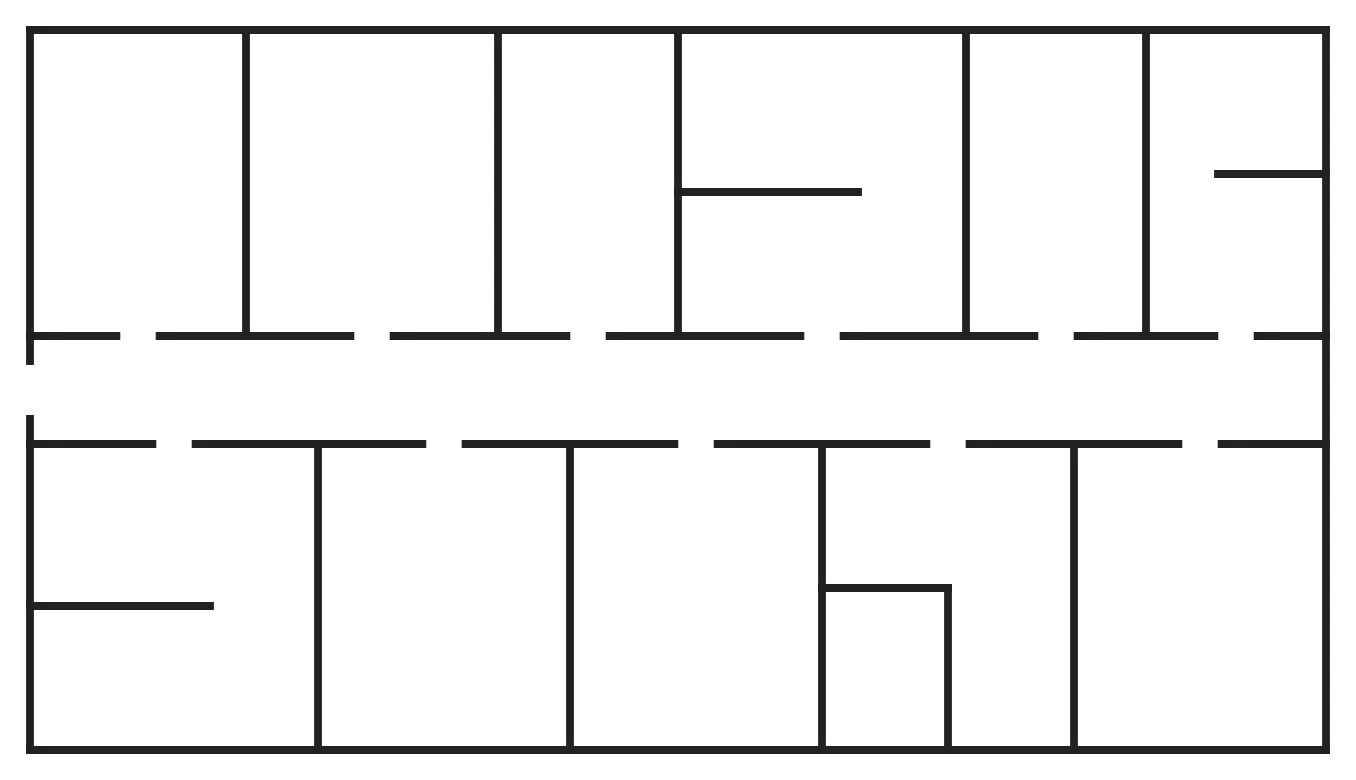
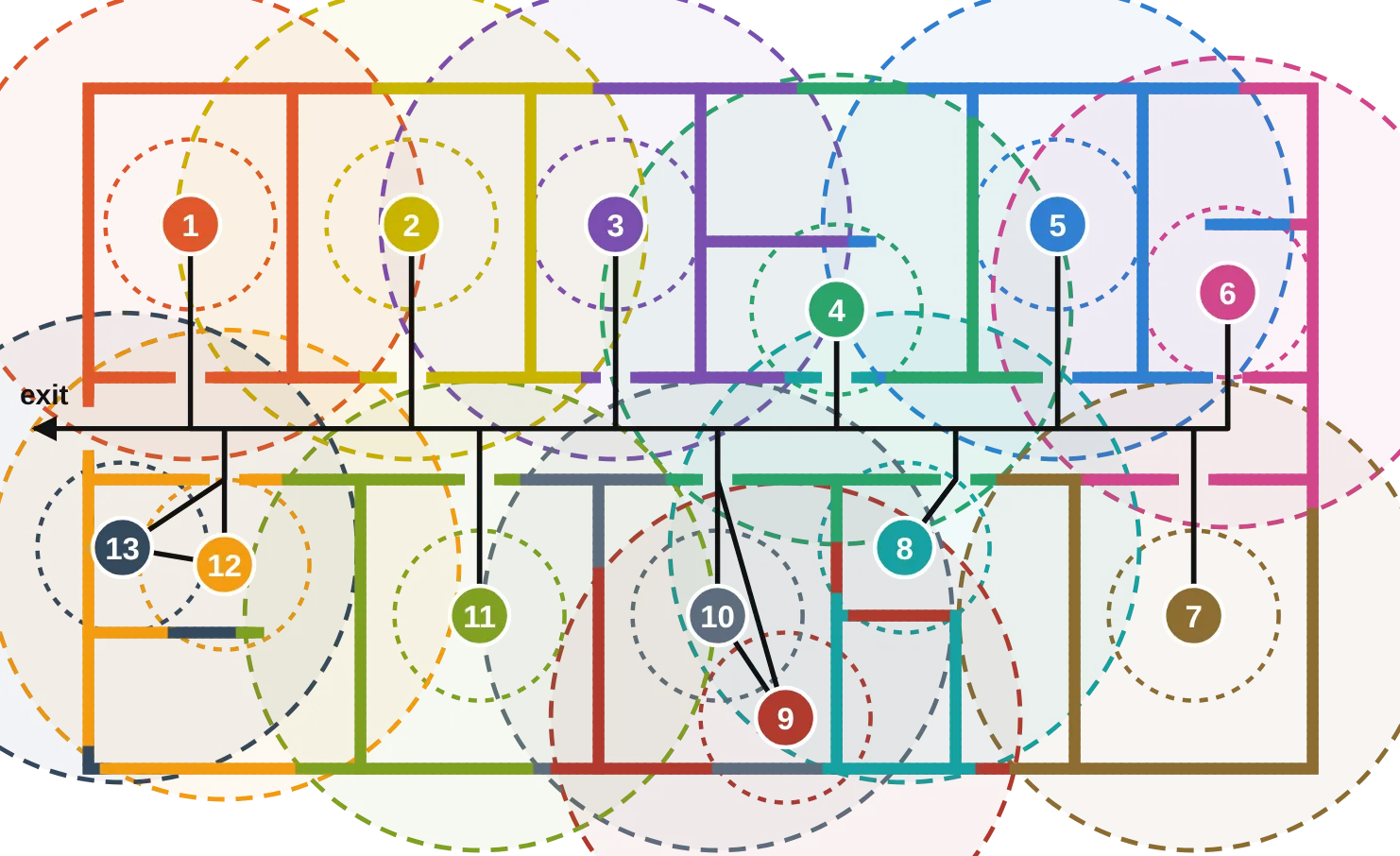
It decides where the machine stands, what it prints from each position and in what order. From an AutoCAD floor plan it outputs machine positions, print files, submission drawings and material quantities. Nothing like it existed, so we built it. It is new, it is ours, and you will only find it at GGI.
01
Positions and sequence
Where the machine stands for each wall, and in what order.
02
Print files
Toolpath files ready for the printer, tuned for print quality.
03
Submission documents
Position layouts and drawings, ready for approval.
04
Material quantities
Per wall and per position, for ordering and control.
Why clients choose GGI
No surprises on site. Every machine position, print file, approval drawing and material quantity is fixed before we mobilise, with software no one else has.
Developed at GGI by Mohamad Kibbi, and the subject of his PhD at Imperial College London. US and EU patents pending.
02The problem it solves
A machine can
print itself in.
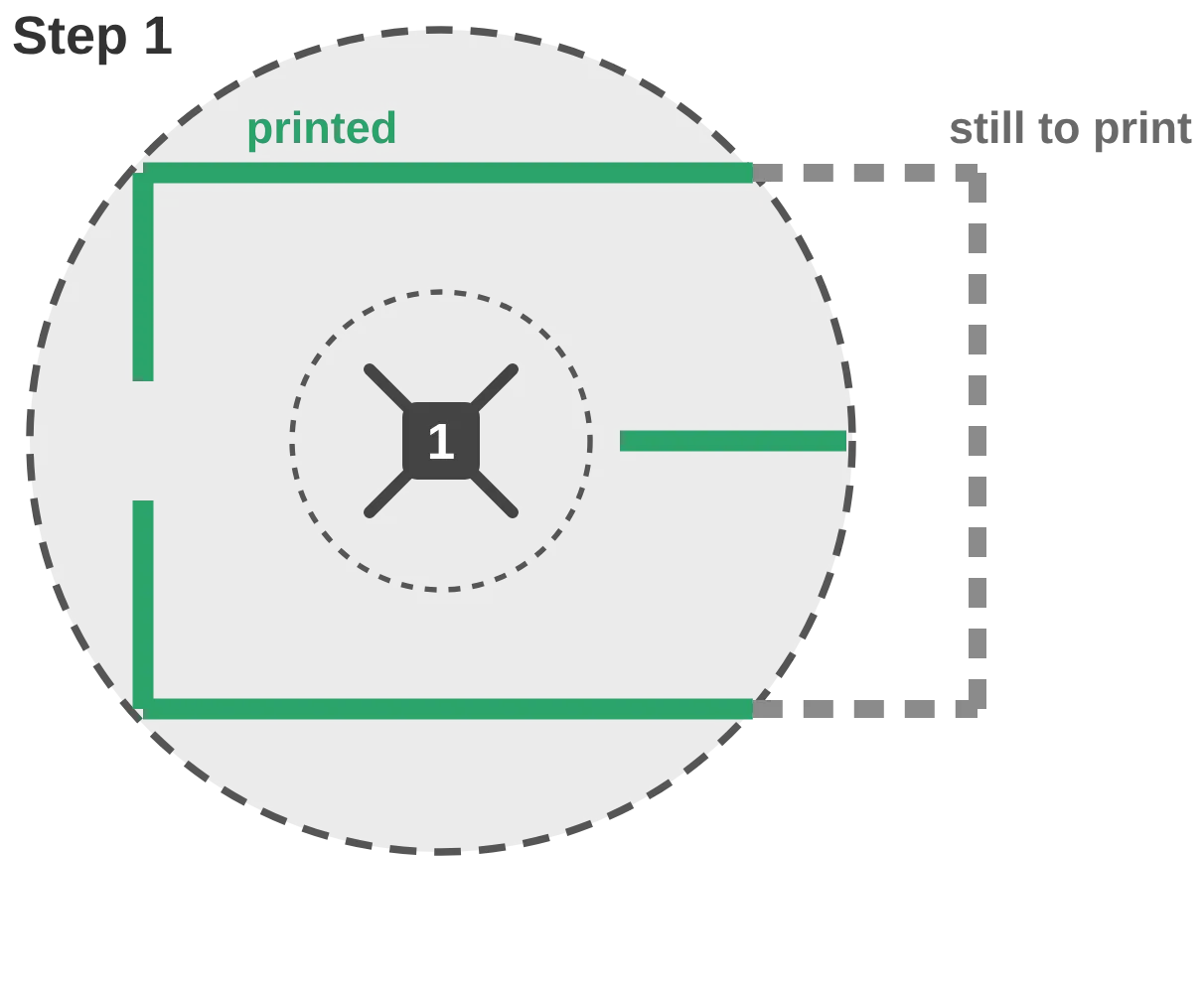
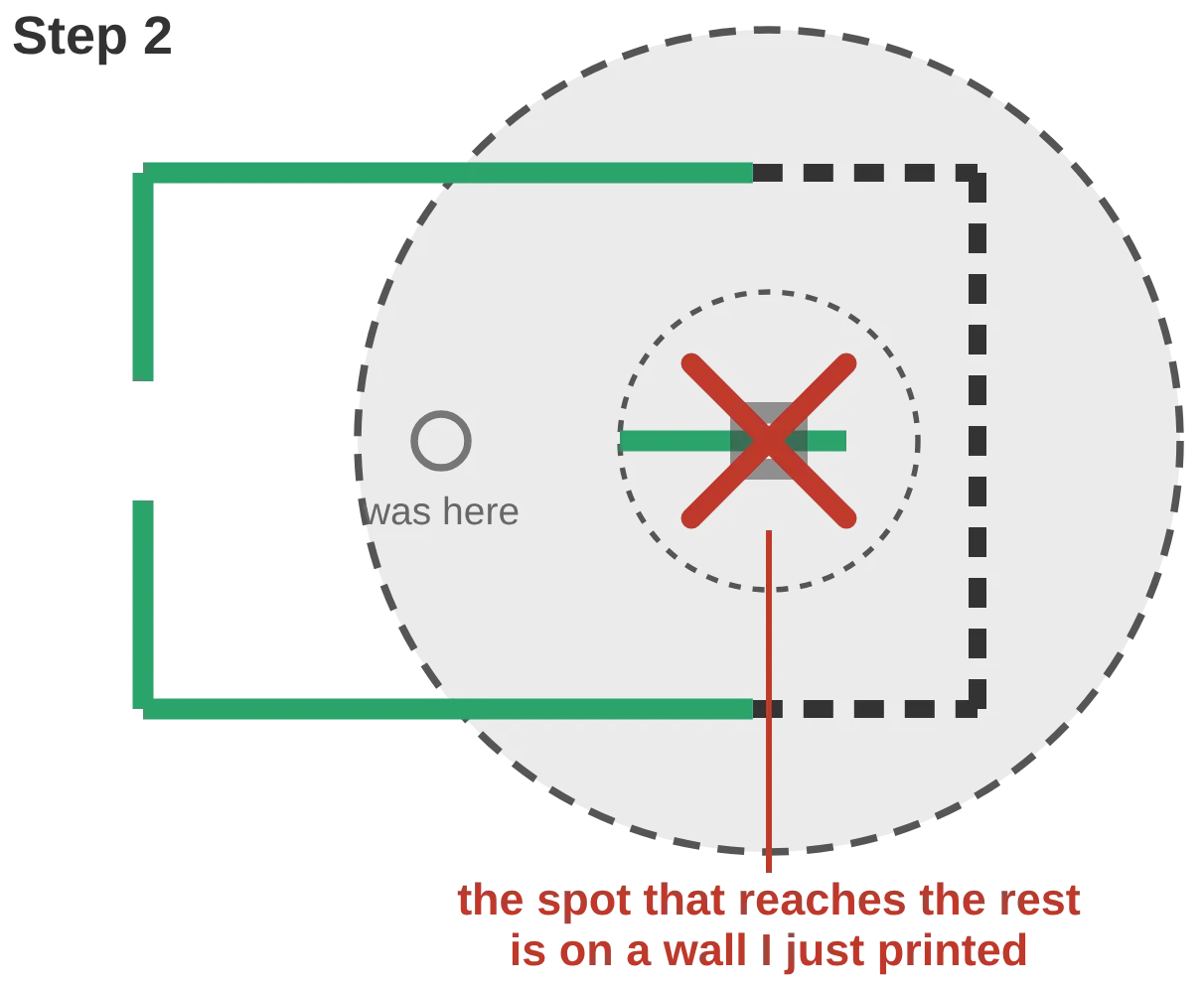
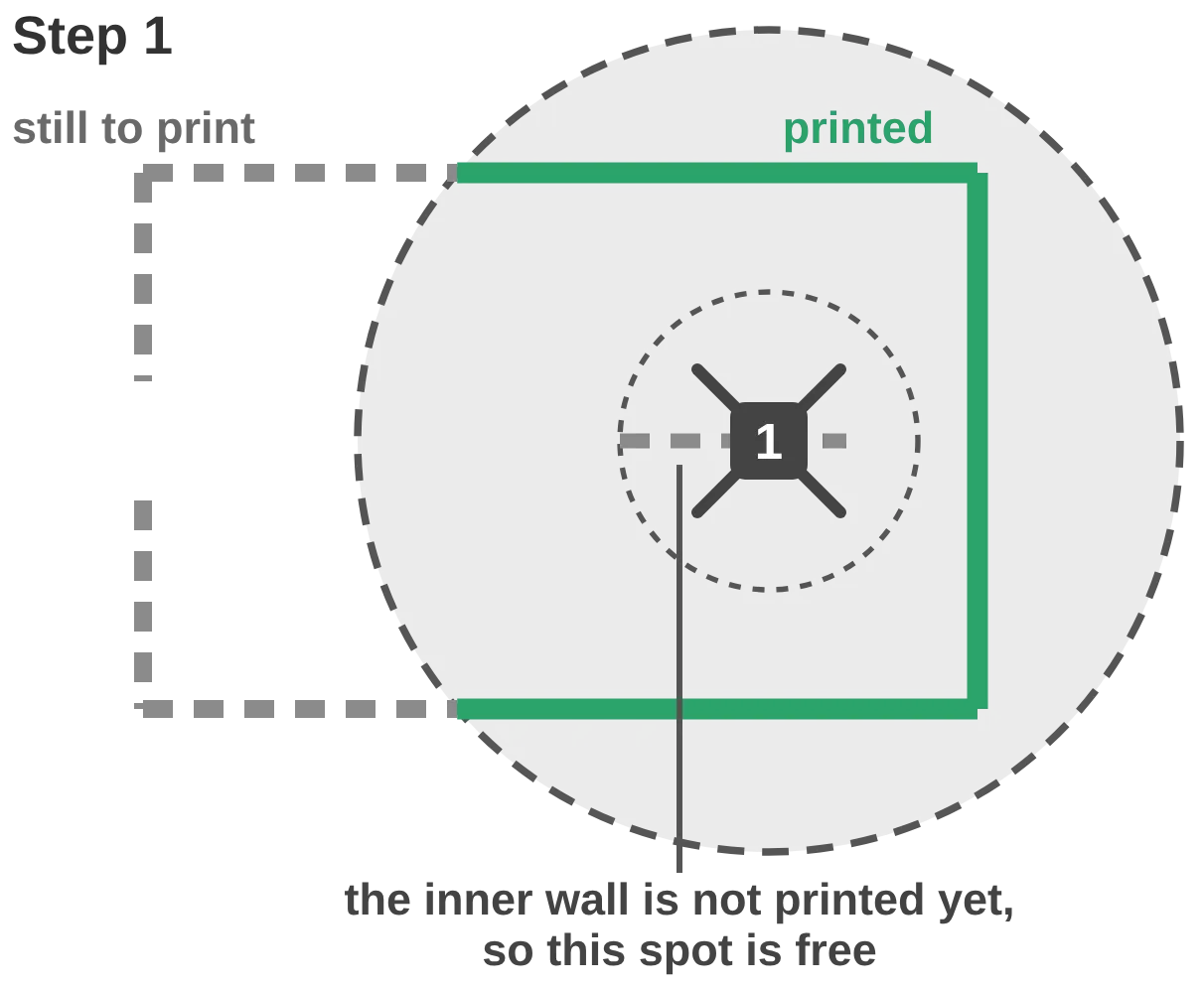
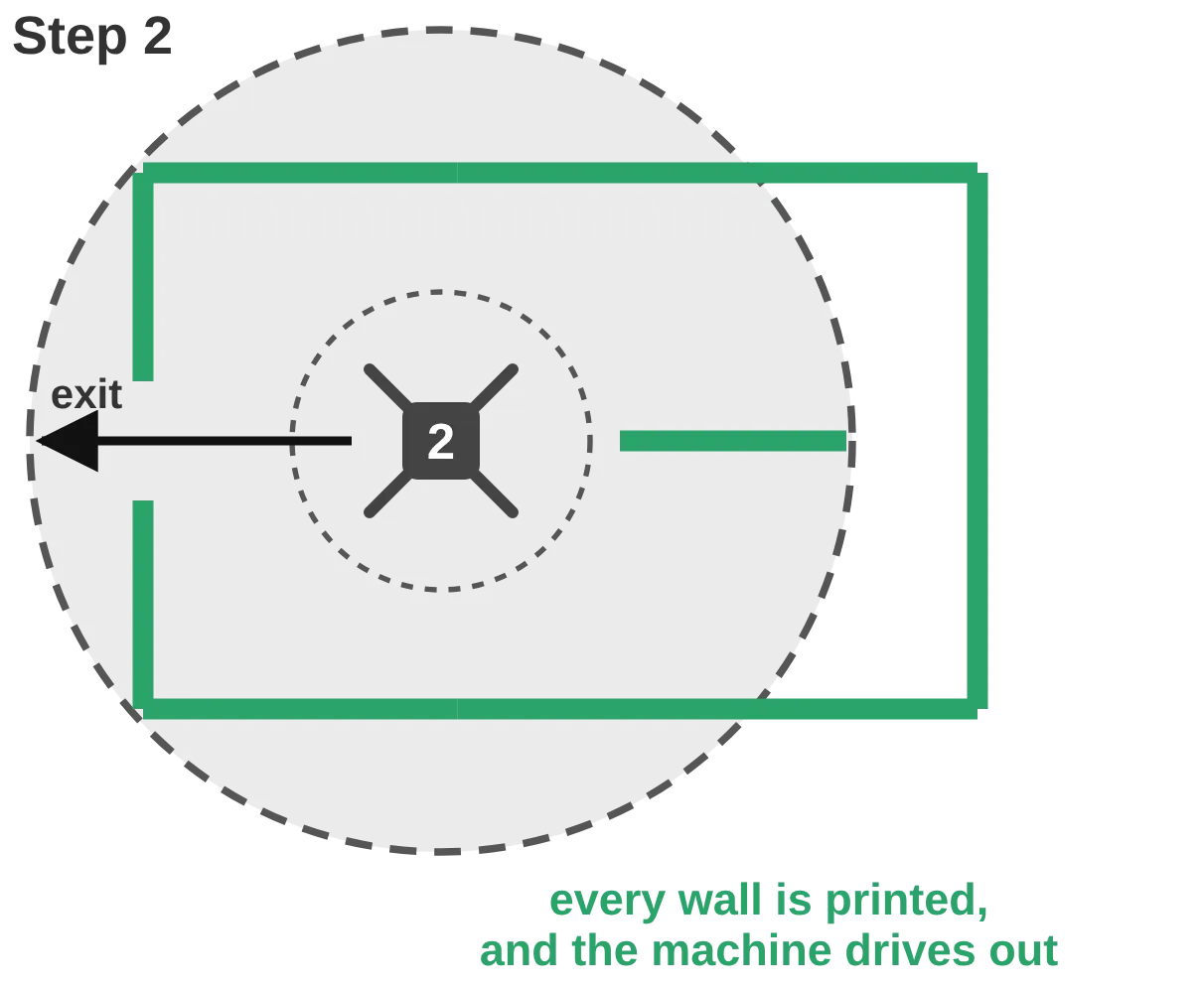
A mobile printer prints the walls around itself, then has to drive out through them. Position, coverage and print order must be decided together, before the first layer, or the machine is trapped. The planner solves it for every room on the plan.
03Materials
Construction waste
becomes the wall.
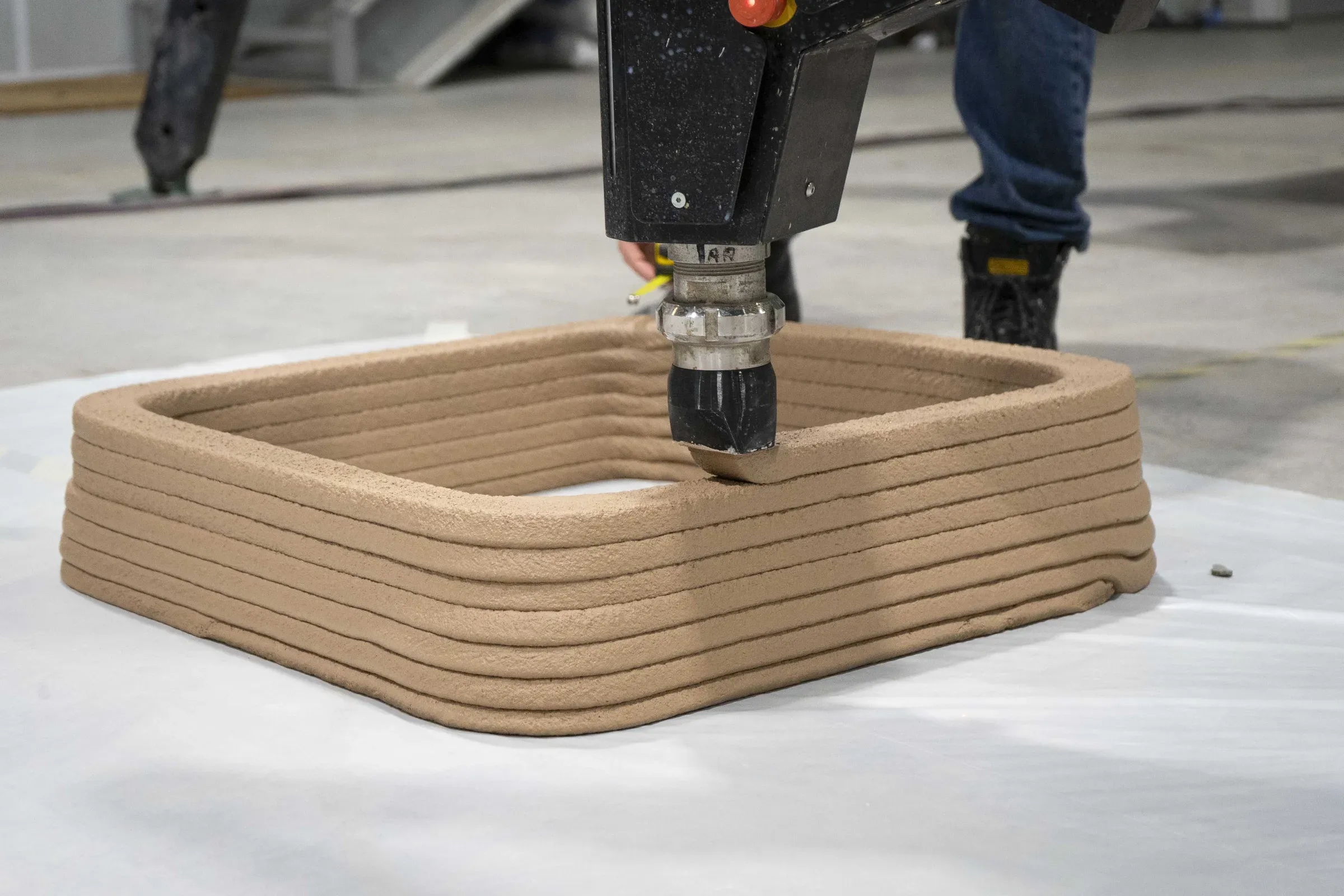
A printable mix that uses recycled concrete aggregate: old concrete is crushed and graded, blended into a dry mix, and printed as new walls. Printing waste and end-of-life material return to the loop. Developed with Hamad Bin Khalifa University and Readymix Qatar.
- Construction wasteOld concrete
- Recycled aggregateCrushed, graded
- Dry mixIn jumbo bags
- Printed wallsOn site
End of life and printing waste return to the loop.
04Testing
Every batch,
every claim.
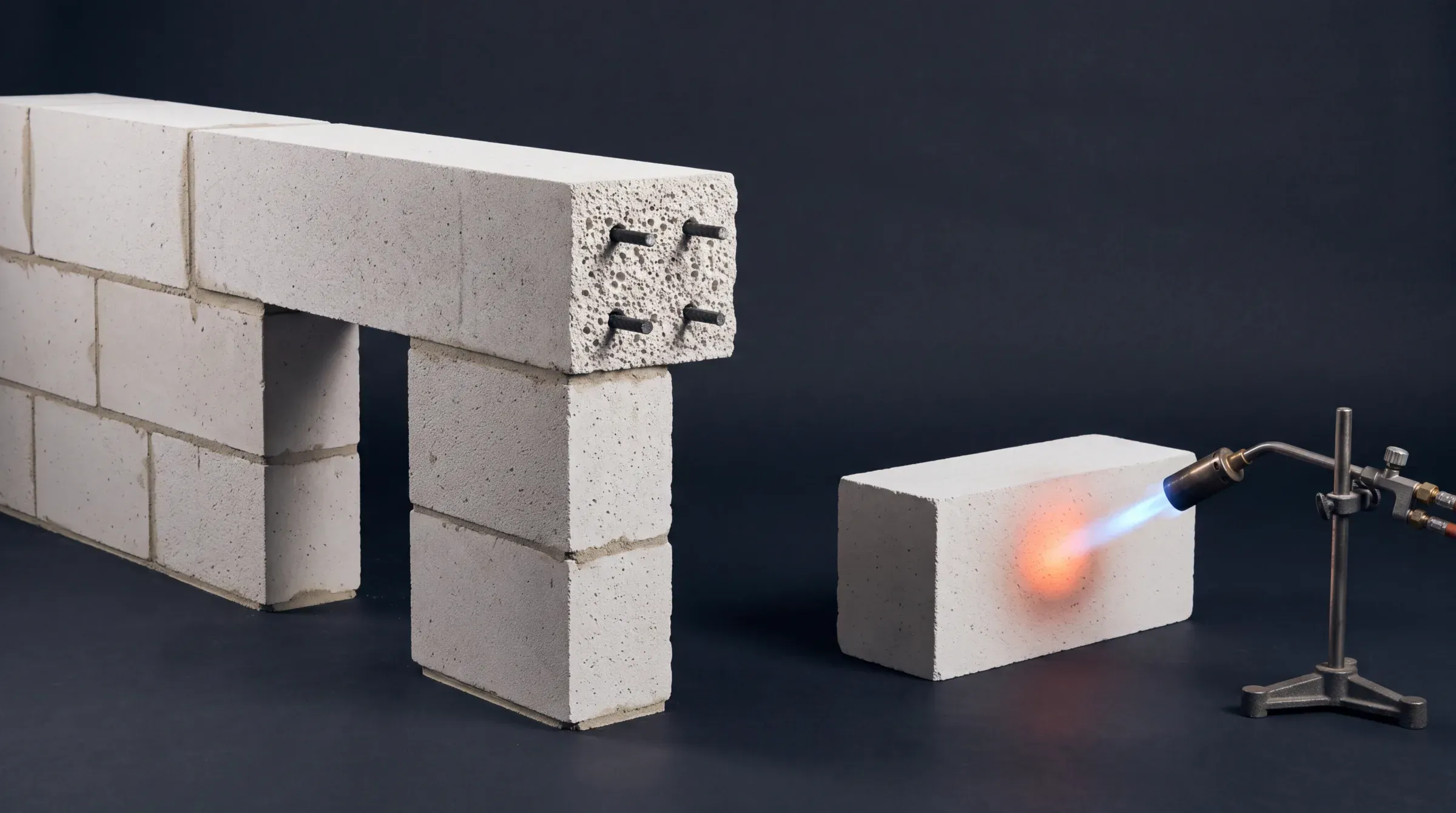
AAC is tested to QCS, ASTM and UL; the 4-hour fire rating at 100 mm is certified by Qatar Civil Defence, and a 150 mm fire block holds 7 hours to ASTM. Printed concrete is checked on site by vane shear and in the lab at 1 and 28 days.
| AAC fire | 4 hr at 100 mm, UL-classified; 7 hr for 150 mm fire blocks to ASTM |
| AAC strength | 4.0 MPa at 550 kg/m³, to QCS 2010 |
| Printed concrete | ≥ 10 MPa at 1 day; ≥ 35 MPa at 28 days; ≤ 0.7 mm/m shrinkage |
| Standards | QCS 2014, ASTM, ACI, BS, EN, DIN, SASO, UL, ICC, BOCA, RILEM |
05People
Trained in France.
Certified to print.
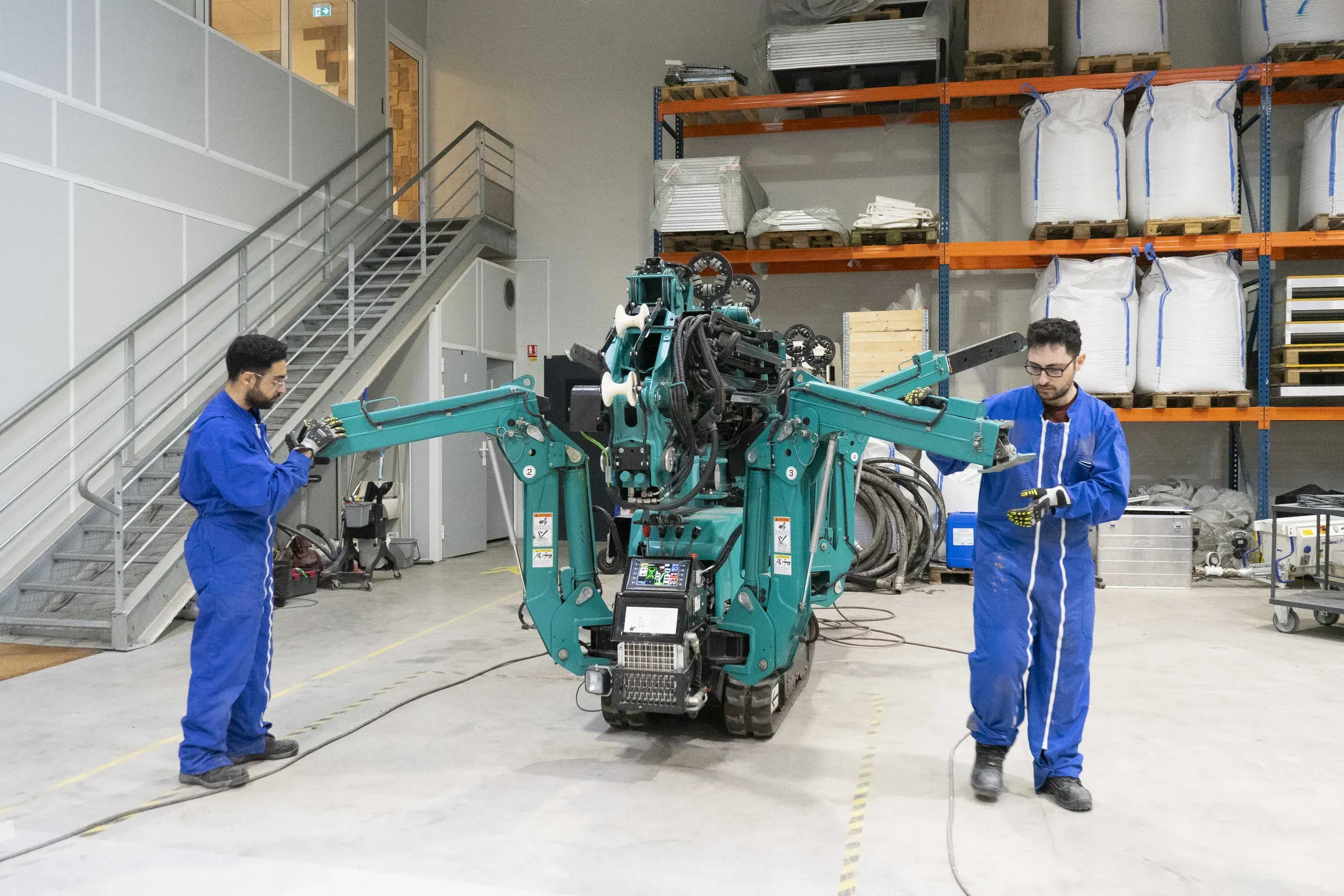
Our operators are trained and certified by Constructions-3D at its works in France before they run a MaxiPrinter in Qatar. The same crews unfold the machine, print the walls and hand over.
06Partners
Universities
and technology.
University · ResearchHamad Bin Khalifa UniversityResearch partner
University · ResearchImperial College LondonRanked 2nd in the world, QS 2027
Technology partnerConstructions-3DMaxiPrinter, France
Technology partnerHolcimPrintable concrete
Technology partnerM-TECMixer-pump
Technology partnerReadymix QatarRecycled-aggregate mix
07Contact
Bring us
the problem.
A plan that will not print, a wall that must curve, a material that should recycle. R&D at GGI starts with a site question.